Documented machine fit
Distributors clarify operation, fabric, attachment, and table needs before the purchase recommendation is finalized.

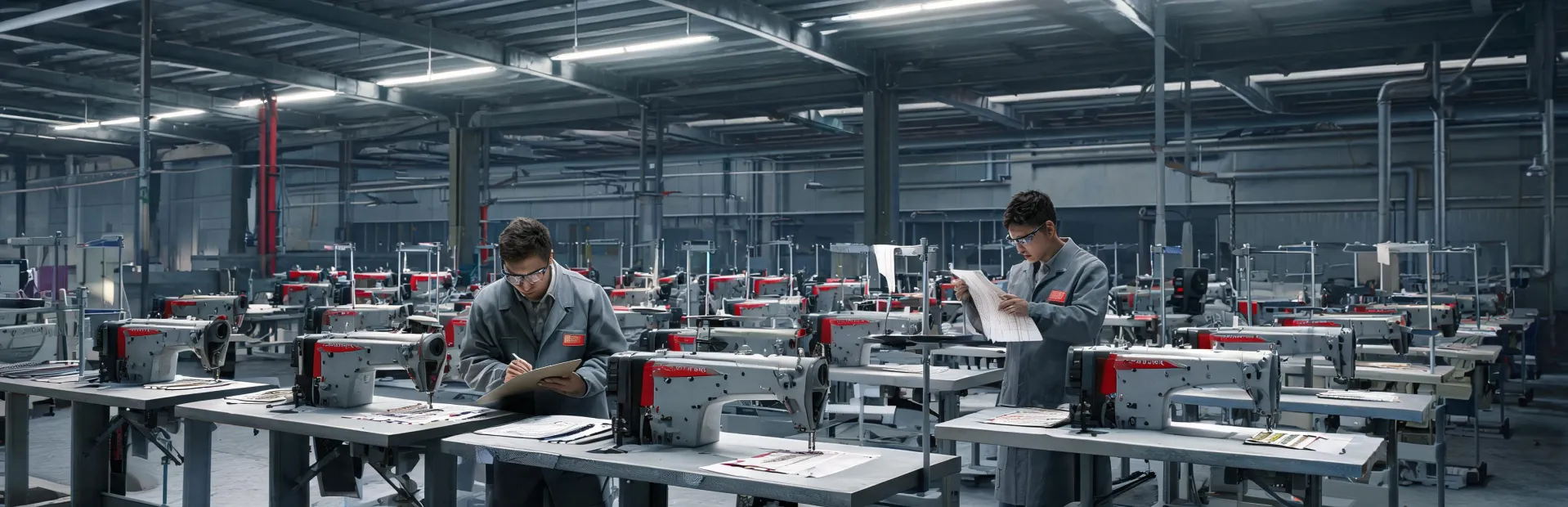
JUKI is treated by many production teams as a technical reference point because its machines sit at the intersection of stitch formation, operator control, service planning, and distributor support. The brand serves buyers who need evidence before committing floor space to a new sewing line.
The direction is practical rather than decorative: cleaner stitch data, easier operator setup, better support for complex materials, and service knowledge that travels with the machine. Apparel manufacturers, upholstery shops, leather goods producers, and embroidery decorators all face shorter style cycles and tighter labor markets. JUKI responds by emphasizing machine families that can be explained, maintained, and integrated into existing production routines.
Distributors clarify operation, fabric, attachment, and table needs before the purchase recommendation is finalized.
More production teams connect machine settings, maintenance notes, and operator feedback to reduce trial-and-error setup.
Digital job preparation and machine-level references will help supervisors move new styles into production with fewer hidden assumptions.
JUKI machine families became familiar in professional sewing rooms because they could support repeat operations, clear adjustment procedures, and daily maintenance discipline.
As customers moved into upholstery, bags, home textiles, and decorated products, the brand emphasis widened from speed alone to material handling and machine matching.
Production supervisors gained more ability to set speed ranges, training limits, and operation-specific controls for operators with different levels of experience.
Embroidery, programmable sewing, and service documentation increasingly require a shared language between operators, mechanics, buyers, and distributors.
A sewing room succeeds when distributors, mechanics, operators, buyers, and quality teams understand the same requirement. JUKI support conversations are designed to keep those roles aligned: the buyer knows why a machine is specified, the mechanic knows what must be maintained, and the operator receives a setup that does not fight the material. This is especially important for manufacturers balancing small batches, repeat orders, and fabric changes inside the same week.
Local guidance for machine availability, table setup, demonstrations, and after-sales coordination.
Adjustment knowledge for feed systems, thread handling, needles, loopers, knives, and servo behavior.
Daily decisions about operator training, seam inspection, work balancing, and rework control.
Verification of seam strength, appearance, stitch density, and consistency across production batches.
A short technical note can connect your fabric, seam class, operator environment, and production target to a more useful recommendation.
Discuss Machine Fit