Define the sewing operation
JUKI specialists ask for samples, seam diagrams, stitch density expectations, fabric variation, and shift output goals. The goal is to understand the job before the machine name becomes the center of the conversation.

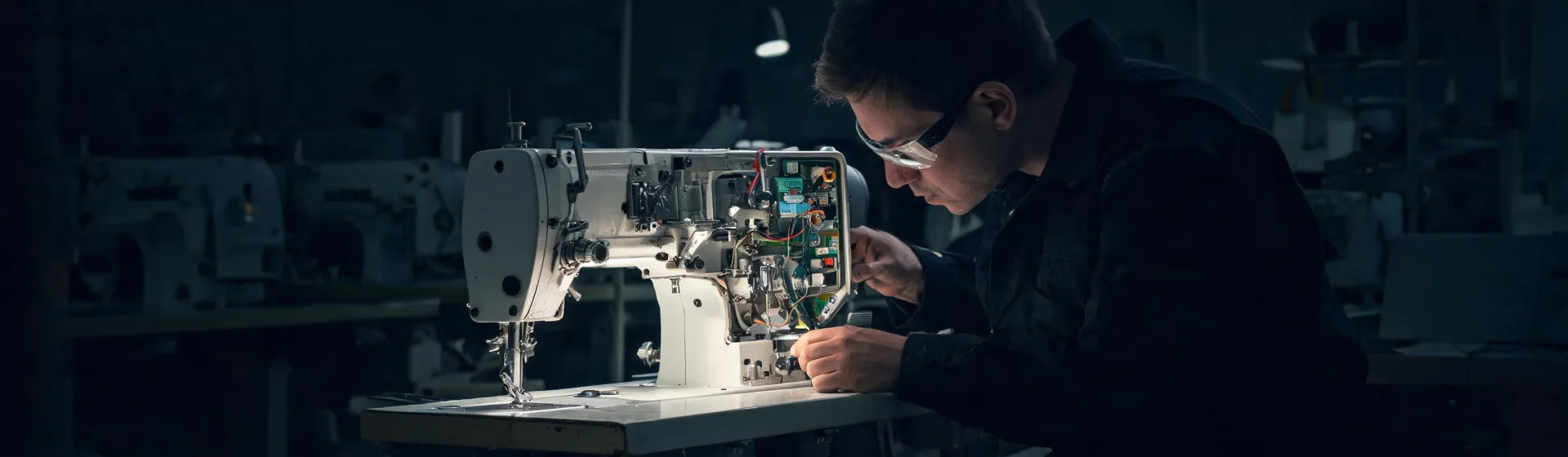
Industrial sewing equipment only performs well when the machine, material, operator training, attachments, and maintenance routine are considered together. JUKI service guidance is built for production managers who need a clear technical basis before adding a lockstitch station, walking foot machine, overlock line, or embroidery cell.
The service conversation starts with measurable sewing-room conditions rather than a generic model recommendation. Teams describe seam classes, fabric weight, thread behavior, daily output, operator skill level, available utilities, table footprint, and the maintenance resources already present in the plant. Those details determine whether a standard lockstitch head is enough, whether a walking foot system is safer for layered materials, whether differential feed matters, or whether embroidery workflow should be treated as a separate production cell.
JUKI specialists ask for samples, seam diagrams, stitch density expectations, fabric variation, and shift output goals. The goal is to understand the job before the machine name becomes the center of the conversation.
Feed type, presser behavior, thread path, motor response, and available attachments are compared against the operation. A high-speed model is not useful if it creates rework on the material that matters most.
Table height, pedal control, lighting, guide placement, and inspection checkpoints are set so the operator can repeat the target seam without compensating for poor workstation design.
Service plans identify wear parts, lubrication intervals, cleaning points, and adjustment references. The machine stays productive because routine care is made visible before downtime becomes urgent.
Send the operation, material, daily output, and any current machine issues. The response can focus on practical machine fit instead of broad catalog browsing.
Start Service Discussion